


Plan Your Perfect National Park Hiking Route: Smart Tips and Real-World Wisdom

Chosen theme: Tips for Planning Your National Park Hiking Route. Start your next park adventure with confidence, clarity, and curiosity. We’ll help you craft a route that fits your goals, protects your time, and leaves room for awe. Share which park you’re eyeing and subscribe for weekly route-planning ideas.

Know the Park Before You Go

Many national parks cap trail usage to protect fragile corridors, so your hiking route may require permits, lotteries, or timed entry. Mark application windows on your calendar, read fine print on group size limits, and build backups. Ask in the comments which park’s permit puzzle you’re tackling this season.

Know the Park Before You Go

Snowpack, wildfire smoke, monsoon storms, and spring mud can radically change a national park hiking route. Comb recent trip reports, study snow depth maps, and check historical weather. Plan conservative mileage early in the season and expand later. Share your trusted condition sources so others can plan smarter too.

Match Route Difficulty to Your Goals and Fitness

Translate elevation gain into effort, not just numbers. A 2,500‑foot climb at altitude can double your expected time. Use recent hikes to calibrate pace, then add buffers for photos, wildlife pauses, and navigation. Comment with your average moving pace so others can benchmark their route planning realistically.

Match Route Difficulty to Your Goals and Fitness

Each route shape changes logistics. Loops showcase new landscapes constantly, lollipops reduce backtracking, and out‑and‑backs simplify navigation. Consider shuttle options, parking constraints, and sunrise viewpoints. Your national park hiking route should make the most of your priorities—solitude, scenery, or speed. Which shape do you prefer, and why?

Map Skills That Make Routes Safer and Smoother

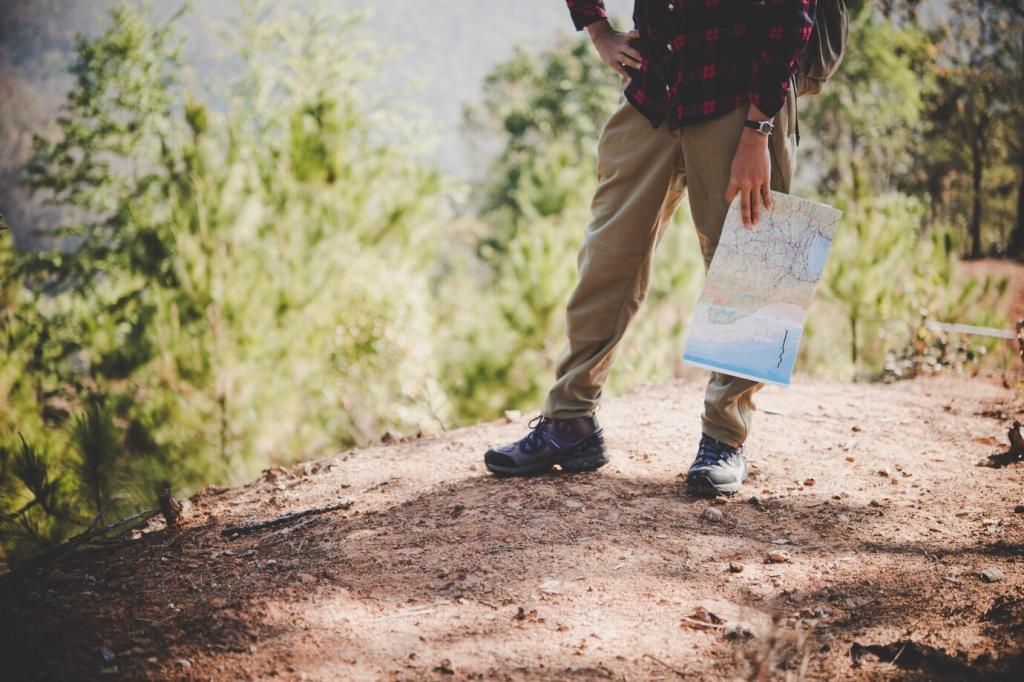
Study contour lines to visualize climbs, benches, and saddles before your boots leave the trailhead. Cross‑check official park maps with reputable apps for accuracy. Annotate tricky sections and scenic spurs. If a map once saved your day, tell us which app or atlas you trust for planning national park routes.

Map Skills That Make Routes Safer and Smoother

Mark reliable water sources, junctions, and alternate exits. Identify canyon choke points, avalanche paths, and seasonal stream crossings. A good national park hiking route includes decision nodes—places where you can shorten, extend, or detour safely. Post your must‑have waypoints so others can build resilient plans too.

Safety Planning You’ll Actually Use

Hazard Spotting: Rivers, Heat, Snow, Scree

Scan your route for objective hazards, then schedule around them. Cross snowfields early, avoid exposed ridges during storms, and time river fords at lower flows. Adjust pace for talus and scree. Have you ever re‑routed for a safer crossing? Tell us how you made the call and what you learned.

Emergency Plan: Check‑Ins and Decision Points

Leave an itinerary with times, waypoints, and a non‑response protocol. Program local emergency numbers and carry an inReach or PLB where appropriate. Define bailouts and thresholds for turning back. Comment with your check‑in template so others can copy and adapt it for their national park hiking routes.

Solo vs. Group Route Choices

Traveling solo may mean shorter distances, simpler terrain, and earlier turnarounds. Groups can move slower but carry more shared gear and confidence. Match your national park hiking route to your team’s least experienced member. What’s your favorite group norm—rotating lead, trailhead briefings, or mandatory water checks?

Footwear, Layers, and Microclimates

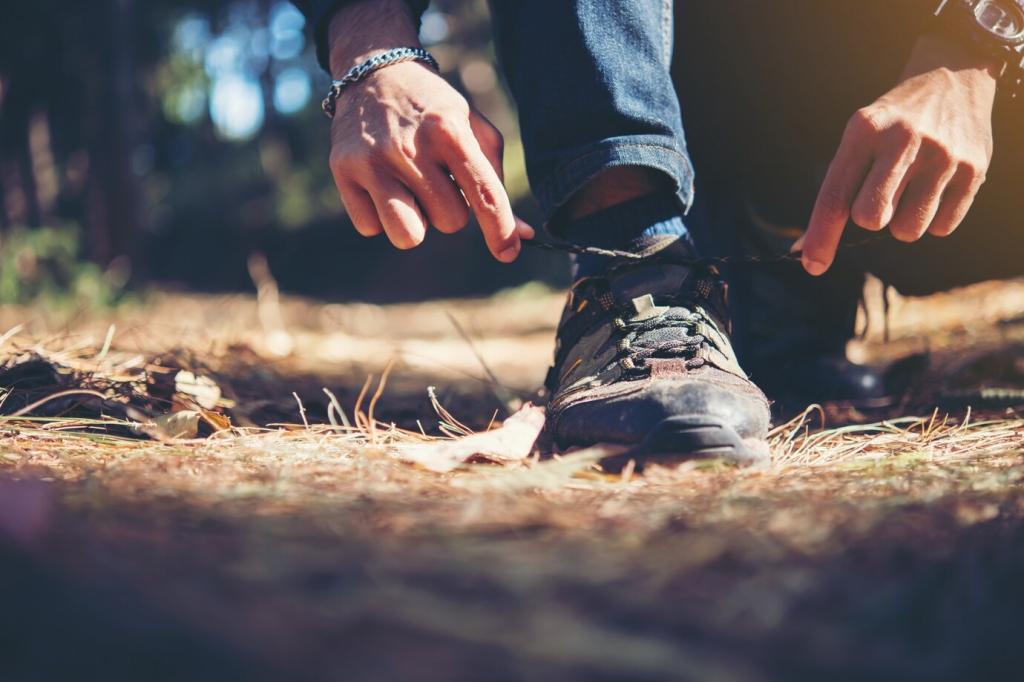
Test shoes on similar terrain before the big day. Pack layers for altitude swings and canyon shade, plus a wind shell that lives in your pack. If your route hugs rivers or crosses snow patches, consider quick‑dry socks and gaiters. Share your most surprising microclimate lesson from a national park hike.

Food, Water, and On‑Route Resupply

Calculate liters needed by temperature, elevation, and effort, and note reliable fill points along your route. Pair slow‑burn snacks with quick sugars for steep pushes. Stash a bonus treat at the turnaround to boost morale. What’s your water carry strategy on long dry stretches in desert parks?

The Small Kit That Solves Big Problems

A minimalist kit—blister care, tape, headlamp, space blanket, and a compact knife—turns inconveniences into non‑events. Add a tiny repair strip for torn packs and poles. Tailor the kit to your national park hiking route’s risks. Comment with one ultralight item that saved your day and why it earned a permanent spot.

This is the heading

Lorem ipsum dolor sit amet, consectetur adipiscing elit. Ut elit tellus, luctus nec ullamcorper mattis, pulvinar dapibus leo.
This is the heading

Lorem ipsum dolor sit amet, consectetur adipiscing elit. Ut elit tellus, luctus nec ullamcorper mattis, pulvinar dapibus leo.

A Route‑Planning Story to Carry With You

We reached the trailhead to find the high pass glazed with spring ice. Because our plan included a lower loop alternative, we pivoted at dawn, caught alpenglow on granite domes, and still hit our mileage. Share your favorite Plan B that turned into a better‑than‑expected day.
Bcgru
Privacy Overview

This website uses cookies so that we can provide you with the best user experience possible. Cookie information is stored in your browser and performs functions such as recognising you when you return to our website and helping our team to understand which sections of the website you find most interesting and useful.